
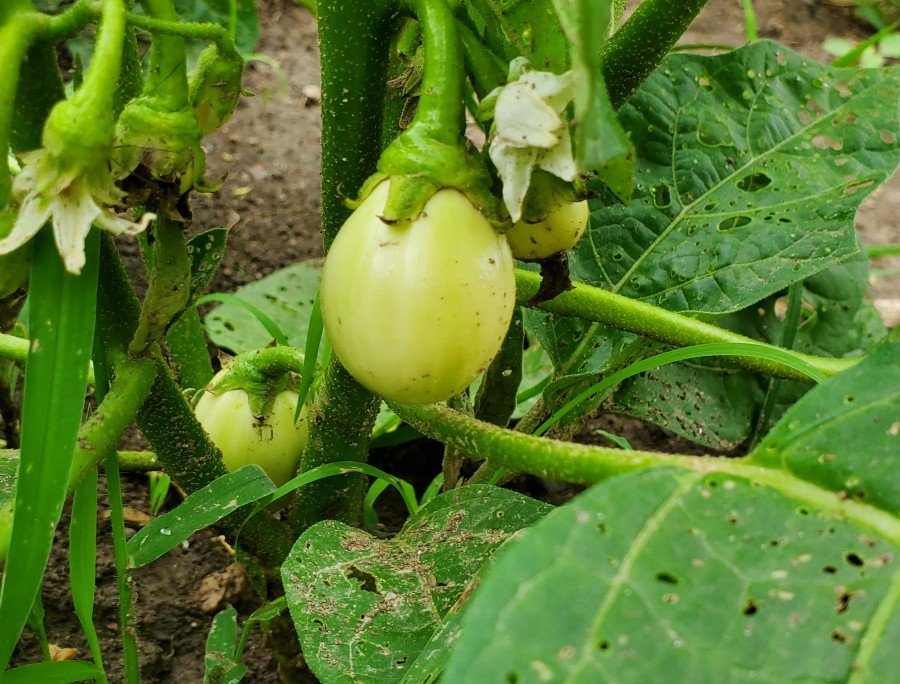
Crop details
African eggplant (garden egg)
Categories
Quick stats
| Family | Solanaceae |
|---|---|
| Typical harvest | 15.0 t/ha |
| Varieties | 2 |
| Pests & diseases | 5 |
| Seasons | 2 |
Crop profile
| Growth habit | annual |
|---|---|
| Days to harvest | 90-140 |
| Main uses | Fruit vegetable |
| Pollination | insect |
| Origin / where it grows | Africa; widely grown |
Weather, soil & spacing
| Best temperature | 20–30 °C |
|---|---|
| Rainfall | 700–1200 mm/yr |
| Altitude | 0–1800 m |
| Best pH | 6–7 |
| Soil type | Fertile loam; good drainage |
| Row spacing | 90 cm |
| Plant spacing | 60 cm |
| Planting depth | 1 cm |
| Seed rate | 0.5 kg/ha |
| Nursery days | 30 |
Simple notes for farmers
About the crop: This crop is annual. You plant, grow and harvest it in one main season, then plant again. You can normally start harvesting about 90-140 days after planting, depending on care and variety.
Main use: Farmers mostly grow this crop for fruit vegetable.
Pollination: This crop is mainly pollinated by insect. Keeping flowers healthy and having insects like bees in the field helps improve fruit set and yields.
Where it grows: Africa; widely grown It is grouped under: Vegetables.
Best climate: This crop does well in warm areas where the temperature is usually between 20 and 30 degrees Celsius. It prefers places that receive around 700 to 1200 millimetres of rain in a year. It can grow from near sea level up to about 1800 metres above sea level.
Soil: The crop grows best in slightly acidic to near neutral soils, with a pH of about 6 to 7. It does well in fertile loam; good drainage. Good drainage is important, so avoid waterlogged spots.
Plant spacing: Plant in rows about 90 centimetres apart, and leave about 60 centimetres between plants in the row. This gives each plant enough space for roots and canopy to spread.
Planting depth: Dig planting holes or furrows about 1 centimetres deep so the roots sit firmly in the soil but are not buried too deep.
Seed or planting material: Use around 0.5 kilograms of seed or planting material per hectare. Spread or plant evenly so the field has a good stand without being overcrowded.
Nursery period: If you raise seedlings in a nursery, keep them there for about 30 days before transplanting to the main field, when they are strong and healthy.
Farmer guide (mwongozo wa mkulima)
Field images (picha shambani)
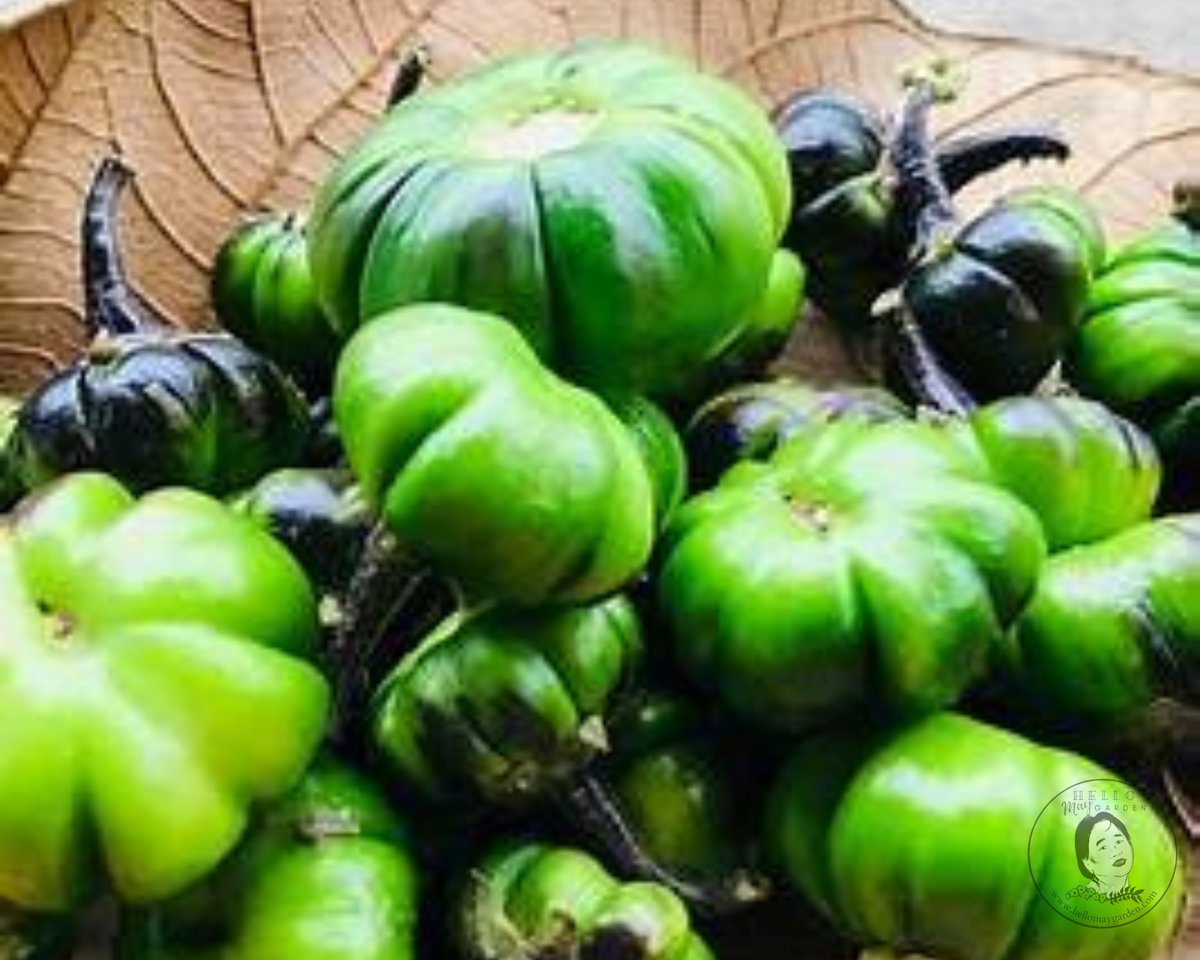
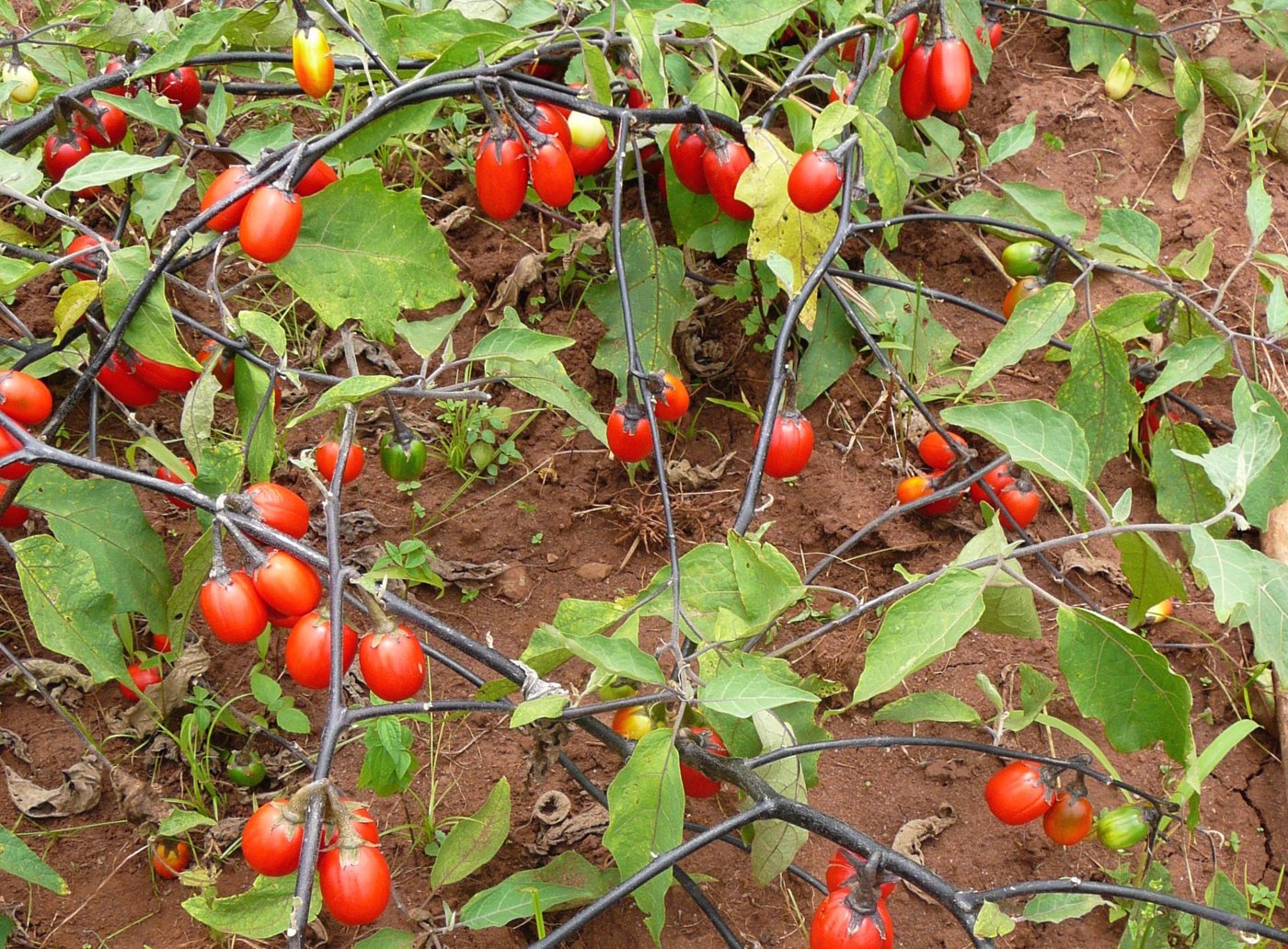
| Name | Country | Maturity | Traits |
|---|---|---|---|
| Nakati type | UG | 100 | Uniform fruits and steady harvest |
| Gilo type | KE | 95 | Round fruits with good market acceptance |
| Stage | Product | Rate (kg/ha) | Notes |
|---|---|---|---|
| Basal | DAP 18-46-0 | 90 | Apply and mix into planting line before transplanting |
| Early vegetative | CAN 26% N | 80 | Apply 2-3 weeks after transplanting |
| Flowering to fruit set | NPK 17-17-17 | 100 | Split into 2 applications under irrigation |
| Fruiting | SOP (50% K2O) | 60 | Support fruit fill and quality |
| Name | Type | Symptoms | Management |
|---|---|---|---|
| Whiteflies | pest | Leaf yellowing, honeydew, sooty mold | Field sanitation, yellow sticky traps, and targeted sprays |
| Aphids | pest | Curled leaves and stunted shoots | Control weeds, conserve beneficials, and use selective sprays |
| Fruit and shoot borer | pest | Bored shoots/fruits with frass | Remove infested shoots/fruits and rotate insecticide modes of action |
| Bacterial wilt | disease | Sudden wilting and vascular browning | Use clean seedlings, rotate with non-solanaceous crops, improve drainage |
| Phomopsis blight/fruit rot | disease | Leaf lesions and sunken fruit spots | Use disease-free seed, prune for airflow, apply registered fungicides |
| System | Typical | Min | Max | Notes |
|---|---|---|---|---|
| rainfed smallholder | 12 | 8 | 20 | |
| open-field irrigated | 18 | 12 | 28 |
| Country | Region | Planting | Harvest |
|---|---|---|---|
| KE | Eastern | Oct-Nov | Jan-Mar |
| KE | Central | Mar-May / Oct-Nov | Jun-Sep / Jan-Mar |
| Country | Region | Suitability |
|---|---|---|
| KE | Central | High |
| KE | Coastal | High |
| KE | Eastern | Medium |